

Introduction
Learning music used to feel harder than it does now. You needed books, classes, maybe a teacher, and honestly… a lot of patience.
Nowadays, people just open their phones.
Because of this, searches for the musicology app are growing. People want simple ways to learn music theory, improve rhythm, train their ears, or just understand music better without making it too complicated.
And fair enough.
This guide explains what a musicology app is, how it works, who it helps, and whether it’s actually worth using in 2026.
What Is a Musicology App?
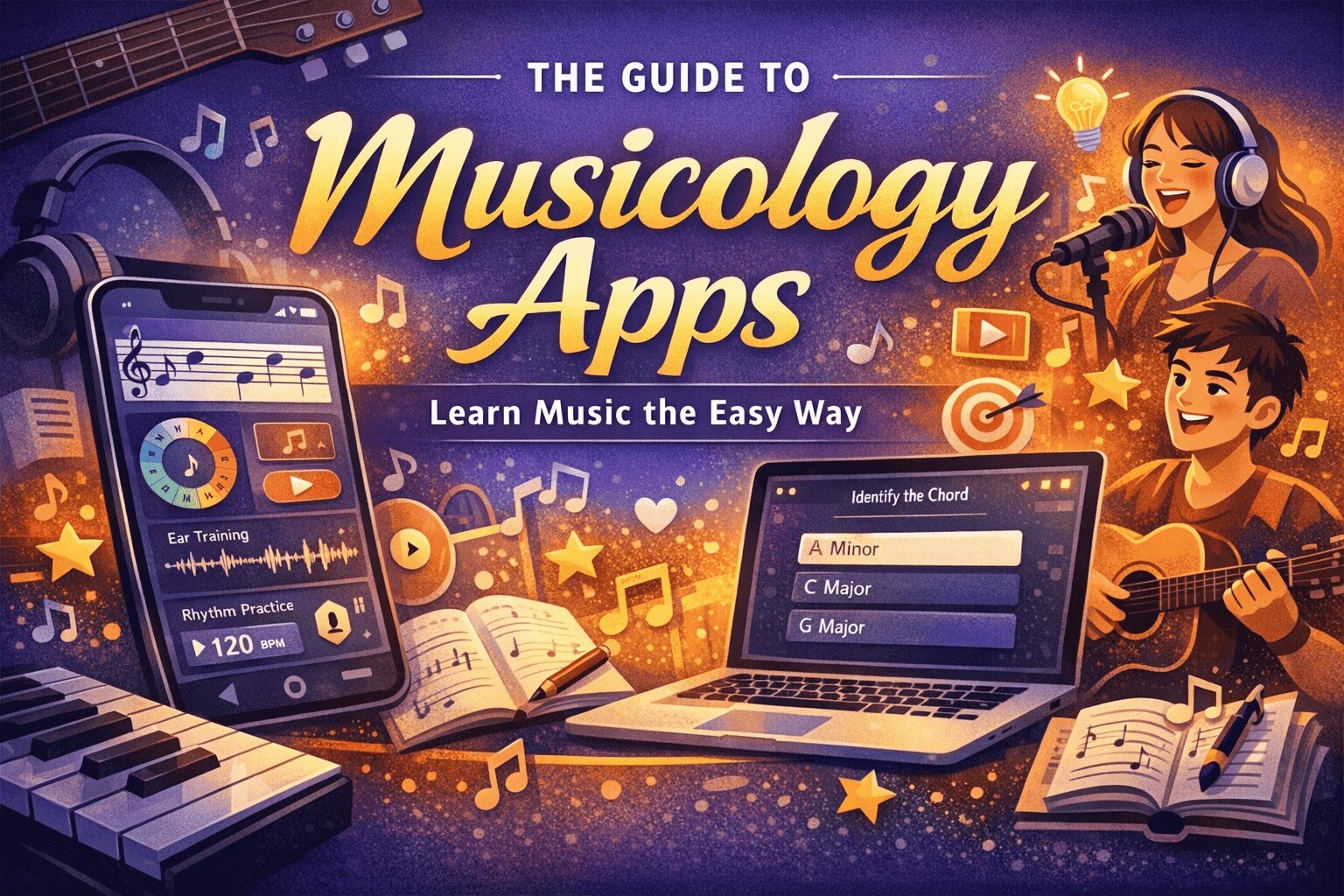
In simple words, a musicology app is usually a mobile or desktop app focused on learning music.
The word “musicology” normally means the study of music, so these apps often cover things like:
- Notes and scales
- Chords
- Rhythm
- Ear training
- Music history
- Composition basics
- Instrument practice help
Overall, it’s kind of like carrying a mini music teacher in your pocket.
Why Are Music Learning Apps So Popular?
The main reason is, convenience.
Human beings are busy now. Now not absolutely everyone can attend weekly instructions or pay for luxurious education.
For example, apps help because:
- You can learn anytime
- Practice at home
- Repeat lessons whenever needed
- Start as a beginner
- Usually cheaper than classes
That’s a big reason people use them. In fact, it has made learning music much more accessible.
What Features a Musicology App Usually Has
For example, most apps include the following features: but most include a few common tools.
First, Theory lessons
In addition, this helps build a strong foundation.
Stuff like:
- Reading notes
- Major and minor scales
- Chords
- Intervals
Next, Ear training
Similarly, this improves your listening skills over time.
- Notes
- Chords
- Pitch changes
Very useful, actually.
Also, Rhythm practice
Tap to beats, count timing, improve accuracy.
Additionally, Quizzes and games
Some apps turn learning into little challenges, which helps people stay interested.
Finally, Progress tracking
You can see what you completed and where you’re improving.
Who Should Use a Musicology App?
In fact, it works for almost all skill levels.
In general, Pretty much anyone curious about music.
Beginners
Probably the best group for it.
Students
Useful for school or college music learners.
Singers
Can help with pitch and rhythm.
Instrument players
Understanding theory helps a lot.
Hobby learners
Some people just enjoy learning for fun.
Nothing wrong with that.
How to Use a Musicology App Properly
A lot of people download apps… then never open them again.
To use it effectively, Instead, follow these simple steps:
First, Pick one goal
Example:
- Analyze piano fundamentals
- Improve rhythm
- Understand chords
- Train your ear
Don’t strive the whole lot right away.
Then, Practice a little daily
Even 10 minutes subjects a couple of random hour once every week.
After that, Repeat lessons
If something feels confusing, repeat it. No shame in that.
Finally, Use real music too
Try applying what you learn to songs you know.
That makes things stick better.
Benefits of Using a Musicology App
There are several advantages. For instance:
Easy access
Your phone is always nearby.
Lower cost
Usually cheaper than lessons.
Learn at your pace
No classroom pressure.
Good for shy learners
Some people learn better privately.
Helps build habit
Short daily practice is easier than long sessions.
Can It Replace a Real Teacher?
However, it cannot fully replace a real teacher.
On the other hand, teachers help with:
Apps are great for:
- Basics
- Practice drills
- Theory review
- Self-learning
But teachers still help with:
- Technique correction
- Motivation
- Personal feedback
- Advanced skills
So the best setup is often both together.
Free vs Paid Apps
A lot of people ask this.
For example, Free versions usually give:
- Basic lessons
- Limited tools
- Ads sometimes
- Small daily access
Meanwhile, Paid versions may offer:
- Full lessons
- Better progress plans
- No ads
- Advanced training
If you’re new, starting free makes sense.
Common Mistakes People Make
However, many people make common mistakes:
Downloading too many apps
Then using none of them properly.
Wanting fast results
Music takes time. No shortcut really.
Skipping basics
Everyone wants advanced stuff first. Bad idea.
Learning theory only
You also need listening and practice.
How to Pick a Good Musicology App
So, keep it simple. In other words, focus on usability over complexity.
- Easy design
- Good sound quality
- Clear lessons
- Positive reviews
- Works for your skill level
A fancy app isn’t always the best one.
Music Apps in 2026
Things are getting smarter now. As a result, learning is becoming more personalized.
Many apps use:
- AI feedback for singing
- Personalized lessons
- Smarter practice plans
- Gamified progress systems
So yeah, music learning apps are improving fast.
FAQs
What is a musicology app?
It’s an app made to help people learn music idea, rhythm, ear training, or associated talents.
Is it correct for novices?
Yes, actually beginners benefit the most.
Can I learn music only with an app?
You can learn a lot, but real practice still matters.
Are free apps enough?
For many beginners, yes. At least to start.
How long until I improve?
Depends how often you practice. Consistency topics more than expertise.
Conclusion
In conclusion, a musicology app can be a clearly beneficial tool in case you need to research song in a simple, flexible way.
It won’t magically flip everyone right into a pro in a single day… but it assist you to apprehend music faster, build practice habits, and live prompted.
And honestly, for many people, starting small on a phone app is way better than never starting at all.
Overall, it’s a simple and practical way to start learning music today.