

Introduction
So, “tracqueur”… at first glance it feels like a fancy or maybe even technical word. Now not some thing you listen every day, right?
And yeah, you’re no longer wrong. It’s not a commonplace English phrase. It comes from French-based usage, and maximum of the time it essentially connects to the idea of monitoring or following some thing.
In easy words, tracqueur typically method a tracker — some thing that follows, video display units, or collects records. That’s the easiest manner to apprehend it.
However relying on in which you notice it, the which means can shift a little.
Let’s ruin it down nicely.
What is Tracqueur (Simple Meaning)
If we keep it very basic, tracqueur is something that tracks things.
That “thing” can be:
- Data
- People
- Movement
- Online activity
- Or even patterns
Sometimes it’s a tool. Sometimes it’s a system. And in some older or more general sense, it can even describe a person doing tracking work.
So yeah, it’s flexible.
Not too strict.
Where the Word Tracqueur Comes From
The word has roots in French language.
- “Traquer” means to track or follow
- “Traqueur” means tracker
Over time, this idea started getting used in different areas like technology, research, and digital systems.
And slowly, it became something people use online as well.
Nothing too complicated here… just language evolving in its own way.
Different Ways Tracqueur is Used
This is where it gets a bit interesting. Because tracqueur doesn’t always mean the same thing.
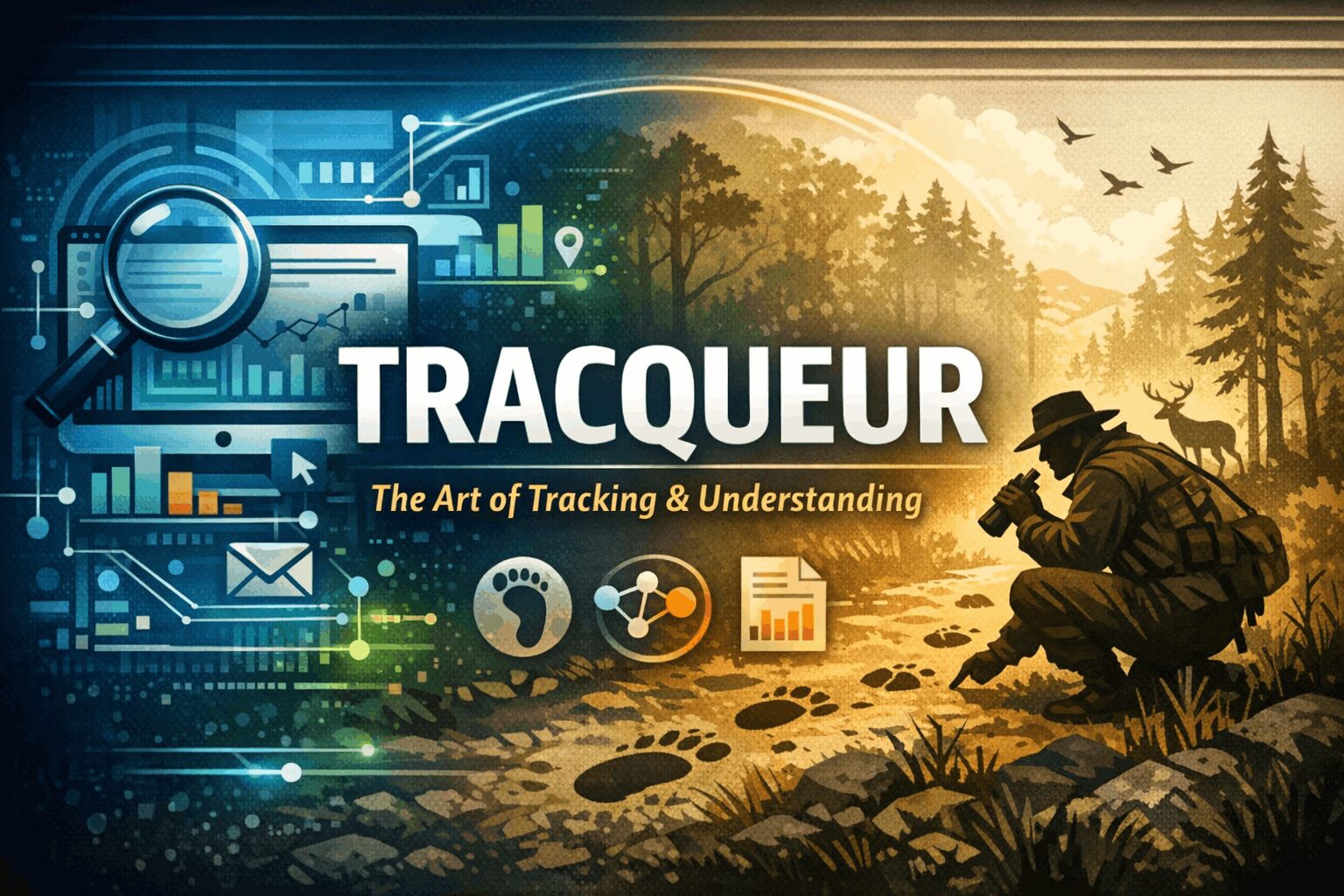
1. Digital Tracqueur (Most common today)
This is what you’ll see the most.
It refers to tools or systems that track online activity like:
- Website visitors
- Clicks on pages
- User behavior
- Time spent on content
- Traffic sources
Basically, anything that helps understand how people use a website or app.
2. Tracqueur as a Person
Sometimes it also refers to a person who tracks information.
Like someone who:
- Studies patterns
- Gathers data
- Observes behavior
- Monitors activity
As an instance, a researcher or analyst.
Now not very not unusual in casual communicate, but nevertheless utilized in positive contexts.
3. Traditional / Outdoor Tracqueur
This one is older in meaning.
It can refer to someone who tracks:
- Animals
- Footprints
- Movement in nature
Think of hunting or survival-style tracking.
A bit old-school, but still part of the word’s background.
How a Tracqueur Works (Simple Steps)
Even though it sounds technical, the fundamental idea is clearly easy.
Permit’s stroll through it grade by grade.
1: It collects information
First, the tracqueur gathers data from somewhere.
Like:
- A website
- An app
- Or a system
2: It records what is happening
All the collected data gets stored somewhere.
Could be:
- Dashboards
- Databases
- Tracking software
3: It looks for patterns
Then it tries to understand things like:
- What users do
- What is popular
- What is not working
- When activity increases
4: It shows results
Finally, it presents everything in a simple form:
- Graphs
- Numbers
- Reports
- Summaries
So people can actually understand it.
Where Tracqueur is Used in Real Life
You might be surprised, but tracqueur systems are everywhere.
Websites
They track:
- Visitors
- Page views
- Clicks
Marketing
Used for:
- Ad performance
- Campaign tracking
- Conversions
Apps
They track:
- User activity
- Engagement
- Retention
Security systems
Used to monitor:
- Login attempts
- Unusual behavior
- System activity
Research
Used for:
- Studying trends
- Analyzing behavior
- Collecting data
Why Tracqueur is Useful
There’s a reason tracking systems are so common.
Helps understand data
Instead of guessing, you see real numbers.
Improves decisions
You can make smarter choices based on results.
Saves time
No need to manually check everything.
Improves performance
Websites and apps get better over time.
But It’s Not Perfect (Some Issues Too)
Yeah, tracqueur systems also have downsides.
Privacy concerns
People don’t always like being tracked.
Too much data
Now and again it becomes overwhelming.
Misreading results
Wrong interpretation can lead to wrong decisions.
Complexity
Some tools are not beginner-friendly at all.
Simple Example of Tracqueur in Action
You install a tracking system.
Then it shows:
- 1,000 people visited your site
- Most clicked article is “SEO guide”
- Users leave after 20 seconds on some pages
Now you use that info to improve content.
That’s basically tracqueur working in real life.
Nothing magical. Just data + understanding.
How to Use a Tracqueur (Easy Steps)
In case you’re thinking nearly, here’s the way it usually works:
1: Install or enable it
You add tracking tool to your website or app.
2: Choose what to track
Like:
- Traffic
- Clicks
- User actions
3: Let it collect data
It runs in the background automatically.
4: Check reports
You view dashboards or analytics.
5: Improve based on data
You adjust your content or strategy.
Simple cycle.
FAQs About Tracqueur
What does tracqueur mean?
It generally means a tracker — something that monitors or follows activity or data.
Is tracqueur an English word?
Not really. It comes from French-based usage and is used in specific contexts.
Where is it used?
Mostly in websites, apps, marketing, and data tracking systems.
Is tracqueur only for tech?
No, it can also refer to people or traditional tracking methods.
Why is it important?
Because it helps understand behavior and improve performance using real data.
Conclusion
So yeah, tracqueur is essentially all approximately monitoring and expertise things — whether that’s humans, information, or online activity.
It sounds a piece technical at first, however the idea is clearly simple.
Collect information → understand it → improve things.
That’s it.
And even though it’s mostly used in digital systems today, the core idea is very old… humans have always been tracking and observing things in one way or another.
Tracqueur is just the modern version of that.