

Introduction
Every year, thousands of mobile apps appear on the Google Play Store. Some become popular, some disappear quietly, and others get removed by Google. That is why many people search topics like google deletes apps from play store.
If you opened the Play Store and noticed an app missing, you might wonder what happened. Was it banned? Did the developer remove it? Was it unsafe?
The fact is, apps can disappear for lots unique motives.
On this guide, we’ll provide an explanation for why google deletes apps from play store, how it affects customers and developers, and what to do if an app you use abruptly vanishes.
What Does It Mean When Google Deletes Apps From Play Store?
Whilst people say google deletes apps from play store, they normally mean Google has eliminated an app listing from the Google Play keep platform.
This could occur in unique approaches:
- Google removes it for policy violations
- Developer removes it voluntarily
- App becomes inactive and unpublished
- Security risks are discovered
- Fake or spam apps get taken down
- Legal or copyright complaints happen
So, not every deleted app means something dramatic.
Sometimes it is routine.
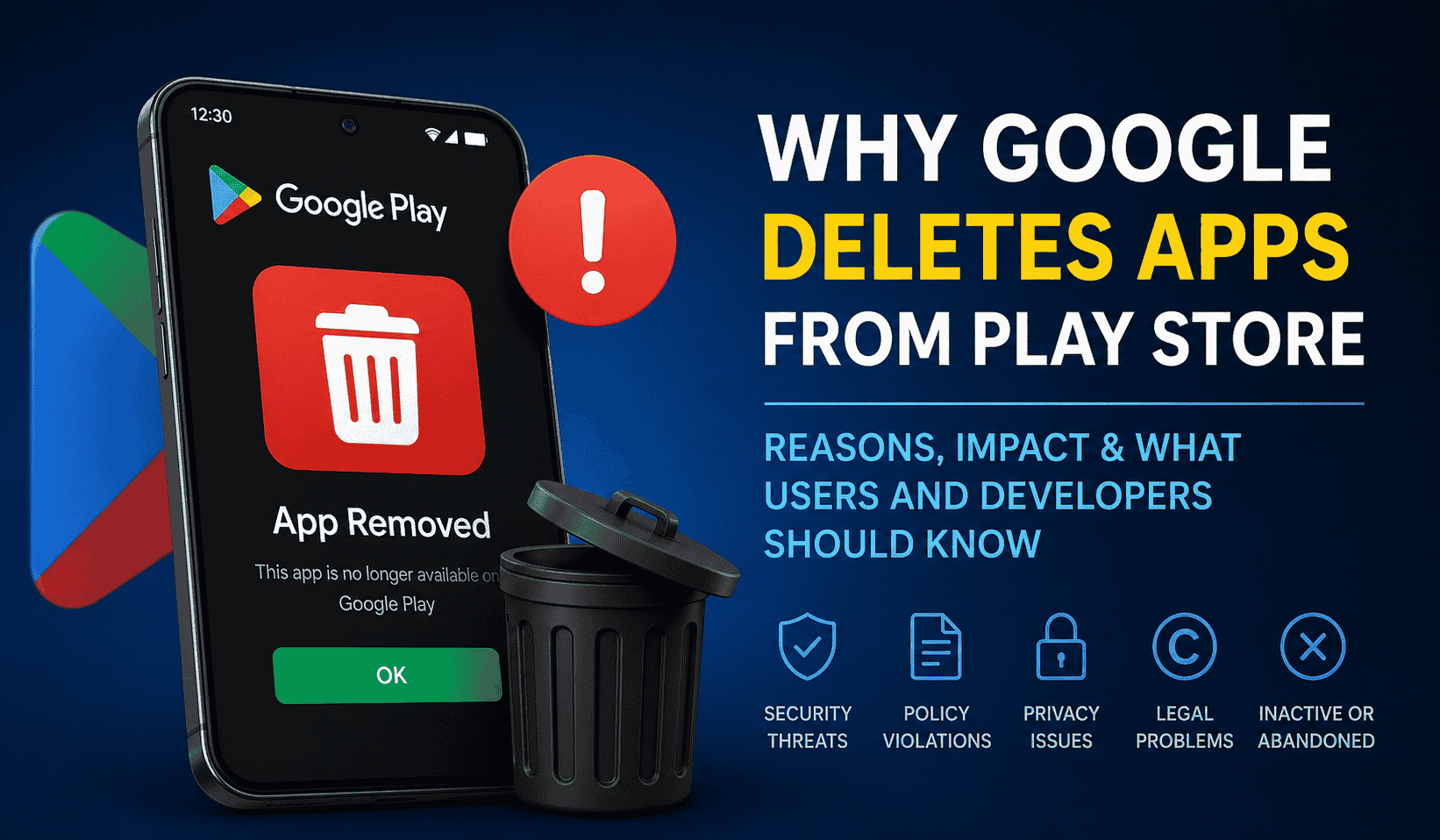
Why Google Deletes Apps From Play Store
Google manages millions of apps. To protect users, it has rules and automated review systems.
Here are the most common reasons apps are removed.
1. Security Threats
This is one of the biggest reasons.
Apps may be removed if they contain:
- Malware
- Spyware
- Hidden downloads
- Data theft tools
- Dangerous permissions abuse
Google often acts quickly when security is involved.
2. Policy Violations
Developers must follow Play Store rules.
Apps may be deleted for:
- Misleading claims
- Inappropriate content
- Spam behavior
- Fake reviews
- Repetitive low-quality apps
- Hidden subscriptions
Even popular apps can face removal if rules are broken.
3. Privacy Issues
User privacy is taken more seriously now than before.
Apps may be removed if they:
- Collect unnecessary data
- Hide tracking practices
- Misuse contact lists
- Request risky permissions without reason
Privacy compliance matters a lot today.
4. Copyright or Legal Problems
Sometimes apps use content they do not own.
Examples include:
- Pirated media
- Trademark misuse
- Fake brand identity
- Unauthorized streaming content
Legal complaints can trigger removals.
5. Inactive or Abandoned Apps
Some apps are old and no longer maintained.
If apps stop meeting standards or target outdated Android versions, they may disappear.
Google has cleaned older apps in recent years for better ecosystem quality.
Why Google Cleans the Play Store
Some users ask why Google removes so many apps.
Honestly, it is usually for platform health.
Benefits of Cleanup:
- Safer downloads
- Less spam
- Better app quality
- Fewer scams
- Improved user trust
- Stronger privacy standards
Without cleanup, the Play Store could become messy fast.
How Users Notice an App Was Deleted
Most people realize it in one of these ways:
App Missing From Search
You search the name and it no longer appears.
Old Link Doesn’t Work
Direct Play Store links may show unavailable.
Update Stops Coming
Installed app remains, but no new updates arrive.
Warnings Appear
Google Play Protect may flag risky apps.
What Happens If You Already Installed the App?
This depends on the reason for removal.
If It Was Policy or Developer Removal
The app may still remain on your phone unless you uninstall it.
If It Was Dangerous
Google may warn you or disable it in some cases.
If It Needs Updates
With out updates, insects and security risks may grow over time.
So yes, deleted from keep does not always suggest deleted out of your device straight away.
Can Developers Restore Removed Apps?
Sometimes yes.
Developers may fix issues and resubmit.
Common Recovery Steps:
- Remove policy-violating features
- Update privacy disclosures
- Fix malware concerns
- Improve permissions handling
- Appeal to Google if mistake occurred
Some apps return after corrections.
Others never come back.
How to Check Why an App Was Removed
Google does not always give public details, but you can investigate.
Try These Steps:
1. Check Developer Website
Official sites may explain the situation.
2. Search News Coverage
Popular app removals often get reported.
3. Look at Social Media
Developers may post updates.
4. Read User Forums
Communities often notice changes quickly.
Still, not every rumor online is true.
Risks of Keeping Removed Apps Installed
Some removed apps are harmless. Others are risky.
Possible Risks:
- No security updates
- Compatibility issues
- Data leaks
- Broken features
- Subscription confusion
- Malware concerns (rare but serious)
If you don’t trust the reason, safer to uninstall.
What Users Should Do If Google Deletes an App They Use
Here’s a practical plan.
Step 1: Don’t Panic
Many removals are administrative.
Step 2: Back Up Data
If the app stores notes, files, or settings.
Step 3: Research the Reason
Check official sources.
Step 4: Find Alternatives
Look for trusted replacements.
Step 5: Uninstall if Risky
Especially if security warnings appear.
What Developers Can Learn
For app creators, removals are serious.
Best Practices:
- Follow Play policies carefully
- Be transparent with permissions
- Update regularly
- Avoid copied content
- Use honest marketing claims
- Test security often
Small mistakes can become big problems.
Famous Types of Apps Commonly Removed
Google often targets categories like:
- Fake cleaner apps
- Ad fraud apps
- Copycat games
- Spy tools
- Crypto scams
- Streaming piracy apps
- Low-quality spam networks
Not every app in these categories is bad, but many removals happen there.
Google Play Store vs Apple App Store
Both remove apps, but systems differ.
| Feature | Google Play Store | Apple App Store |
|---|---|---|
| Open Ecosystem | More Open | More Controlled |
| App Volume | Very High | Lower |
| Removals | Frequent Cleanup | Strict Review Upfront |
| Flexibility | High | Lower |
| User Choice | Strong | Curated |
Different models, same goal: user trust.
Will Google Continue Removing Apps?
Almost certainly yes.
Future focus areas may include:
- AI-generated spam apps
- Fake finance apps
- Deep privacy checks
- Stronger child safety rules
- Subscription transparency
- Scam prevention systems
The store will probably become stricter, no longer looser.
How to Stay Safe on Play Store
Despite Google protections, customers must live clever.
Safety Tips:
- Check reviews carefully
- Download from known developers
- Review permissions
- Avoid suspicious promises
- Keep Play Protect enabled
- Update apps regularly
Simple habits help a lot.
FAQs About Google Deletes Apps From Play Store
1. Why does Google delete apps from Play store?
Normally for protection problems, coverage violations, privacy concerns, junk mail, or previous popularity.
2. Am i able to nevertheless use an app after removal?
Sometimes yes, if already installed. But updates may stop.
3. Does deleted mean dangerous?
Not always. Some apps are removed for business or policy reasons.
4. Can developers bring apps back?
Yes, if issues are fixed and Google approves.
5. Will my statistics be affected?
Depends at the app. It’s far smart to again up records.
6. How do I discover safe options?
Use trusted builders and properly-reviewed apps.
Conclusion
The word google deletes apps from play store sounds dramatic, but app removals take place for lots motives. A few are extreme safety problems. Others are simple policy corrections, state of being inactive, or voluntary removals.
For users, the pleasant reaction is to stay knowledgeable, again up important statistics, and keep away from keeping suspicious apps hooked up.
For developers, it’s miles a reminder that believe, privateness, and fine count number extra than ever.
In the end, Google gets rid of apps to maintain the Play shop safer and extra useful—even if it can be inconvenient occasionally.