

Introduction
If you’ve landed here searching for stormuring, you’re probably a bit confused.
Yeah that makes sense. The word Stormuring looks like it should mean something official but when you try to find a clear definition things get a bit messy.
So let us just talk about Stormuring. No overthinking is needed here.
What is Stormuring?
Stormuring is not a dictionary word. You will not find Stormuring in English references or academic texts, about Stormuring.
Instead Stormuring is mostly used online in a creative or informal way to describe things like:
People usually use it to describe things like:
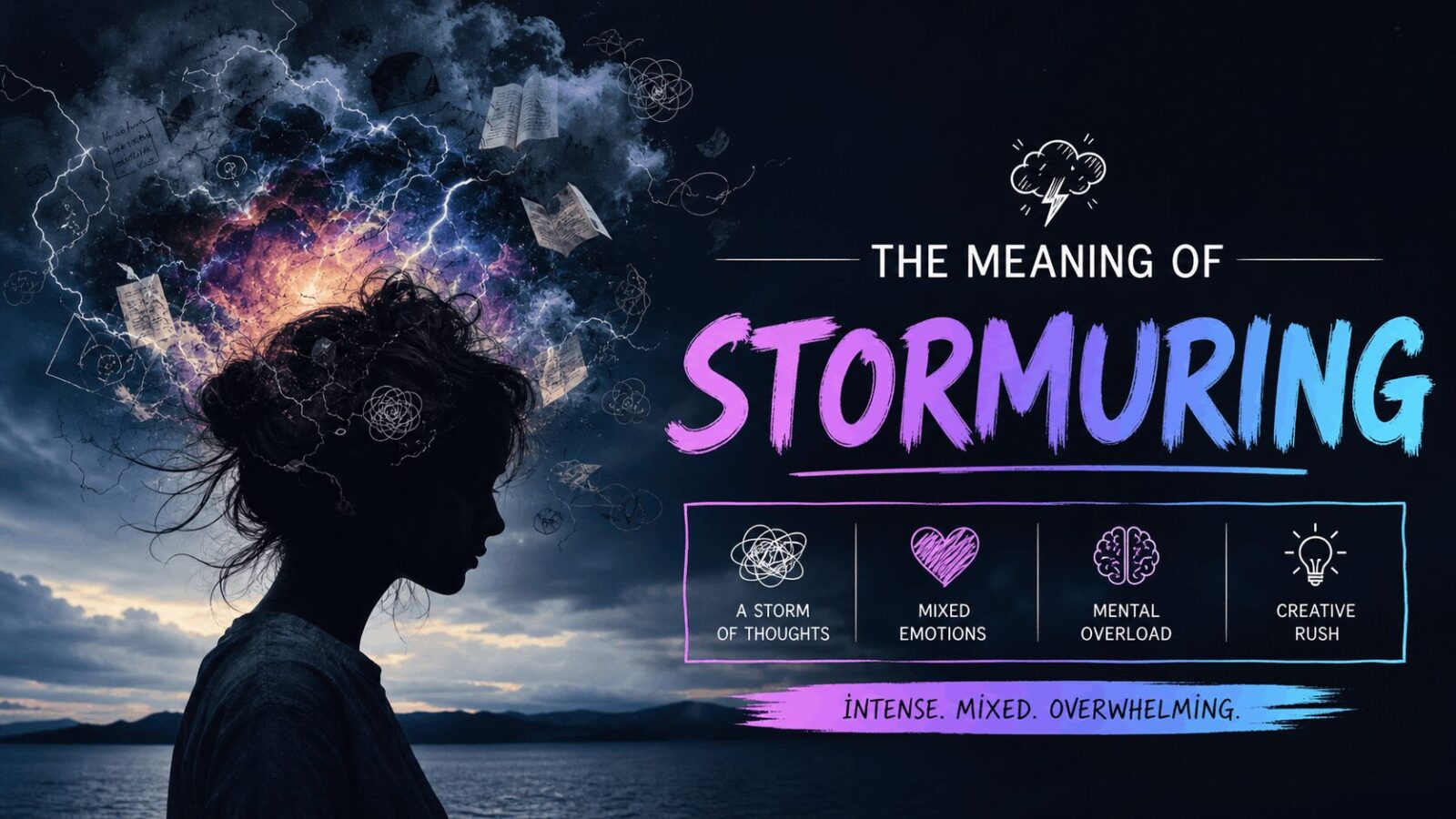
- A storm of thoughts in the mind
- A mixed emotional state
- Feeling mentally overwhelmed
- Or even a creative “rush” of ideas
So basically… it’s more of a feeling word than a technical term.
Stormuring Meaning (Simple Explanation)
Let’s make the stormuring meaning very easy:
Stormuring is when your thoughts and emotions are over the place. It’s like a storm, inside your head. You feel emotions and mixed feelings all at once.
That’s the way I can describe it.
It’s not scientific. It’s not official. It’s just expressive.
Sometimes people use it when:
- Their mind is full of thoughts
- Emotions feel heavy or confused
- They are mentally overloaded
- Or creativity is flowing too fast
Where Do People Use Stormuring?
You won’t see this word in textbooks or professional writing.
Instead, it shows up in:
- Social media captions
- Creative writing or poetry
- Online usernames
- Personal blogs or posts
- Mood-based expressions
It’s more of an internet-style expression.
Not formal language.
What About “Heydi Stormuring”?
You may have also seen heydi stormuring floating around.
And honestly… this isn’t a fixed phrase either.
Most likely, it is:
- A username
- A creative tag
- Or a personalized online identity
It doesn’t change the meaning of stormuring itself.
It just adds style to it.. You can say it adds branding.
Think of it like this:
- Stormuring = the concept or feeling
- Heydi stormuring = a stylized version used online
Simple.
Real-Life Examples of Stormuring
Sometimes words make sense when you see them in action.
Here are a few examples:
Example 1: Emotional overload
“I felt stormuring after everything happened at once.”
Meaning: emotions felt mixed and heavy.
Example 2: Creative thinking
“My mind was stormuring while I was designing.”
Meaning: lots of fast ideas coming together.
Example 3: Mental confusion
“It was a stormuring week for me.”
Meaning: mentally busy or chaotic week.
Stormuring vs Normal Thinking
Let’s compare it in a very simple table.
| Feature | Normal Thinking | Stormuring |
|---|---|---|
| Clarity | Clear | Mixed |
| Speed | Normal | Fast and scattered |
| Emotion | Balanced | Intense |
| Creativity | Controlled | Overflowing |
| Feeling | Calm | Overwhelming |
So basically… stormuring is like your mind is doing too much at once.
Different Meanings People Give to Stormuring
Since it’s not an official word, people interpret it differently.
1. Emotional meaning
A wave of strong feelings happening together.
2. Mental meaning
Too many thoughts at the same time.
3. Creative meaning
A burst of ideas, sometimes messy but powerful.
4. Symbolic meaning
Used to represent chaos or inner intensity.
So yeah… it depends on context.
That’s why it feels a bit flexible.
Why Do People Use the Word Stormuring?
There are a few simple reasons:
- It sounds expressive
- It feels emotional
- It works well in captions
- It describes complex feelings in one word
- It spreads easily online
Words can become really popular just because they feel right not because they’re official words.
Is Stormuring a Real Word?
Let’s be clear.
- Not found in official dictionaries
- Not used in formal English
- Used informally online
- Used in creative expression
So it exists… but not as a formal word.
More like internet language.
How to Use Stormuring in Sentences
If you want to use these words here are some examples:
- “My thoughts were stormuring all night.”
- “She described her mood as stormuring.”
- “Everything felt stormuring in my head.”
- “It was a stormuring experience.”
It works best when describing emotions or mental states.
When You Should Avoid Using This
Since it’s informal, don’t use it in:
- Academic writing
- Professional emails
- Business documents
- Technical reports
It’s better suited for:
- Blogs
- Poetry
- Social media posts
- Creative writing
Basically anything casual.
Pros of Using Stormuring
Even though it’s informal, it has its strengths:
1. Very expressive
It captures complex feelings quickly.
2. Creative tone
Adds style to writing.
3. Flexible meaning
Can fit different situations.
4. Modern internet vibe
Works well in online content.
Limitations of Stormuring
Of course, there are downsides too.
1. No fixed meaning
People may understand it differently.
2. Not formal
Can’t be used in professional writing.
3. Context-dependent
Meaning changes depending on usage.
Simple Summary of This
If we put everything together:
Stormuring is a word that describes a mix of thoughts or feelings that are really intense and overwhelming.
That’s all there is to it. It’s quite simple.
FAQs
What is stormuring meaning?
Stormuring meaning refers to a mental or emotional state where thoughts or feelings feel intense and mixed.
Is stormuring a real word?
No it is not a dictionary word but people use it online in casual conversations.
What does heydi stormuring mean?
It is likely a stylized or personal version of the word stormuring used as a name or tag.
Can I use stormuring in writing?
Yes,. Only when chatting with friends or being creative.
Is stormuring emotional or mental?
It can be both. It usually describes emotional or mental intensity.
Conclusion
So yeah… stormuring is not a formal English word, but it still has meaning in online and creative spaces.
The stormuring meaning usually points to a strong mix of thoughts, emotions, or mental overload.
And variations like heydi stormuring are just creative or personal uses of the same idea.
At the end of the day it’s one of those internet words that people use when regular language doesn’t feel right.
And maybe that’s why it keeps being used this word sticks around.