

Introduction
So, if you’re searching for assisted reproductive technology jobs, you’re probably trying to understand what kind of work this actually is… and whether it’s a real career path or just some medical term you saw online.
It’s real. And growing. Pretty fast actually.
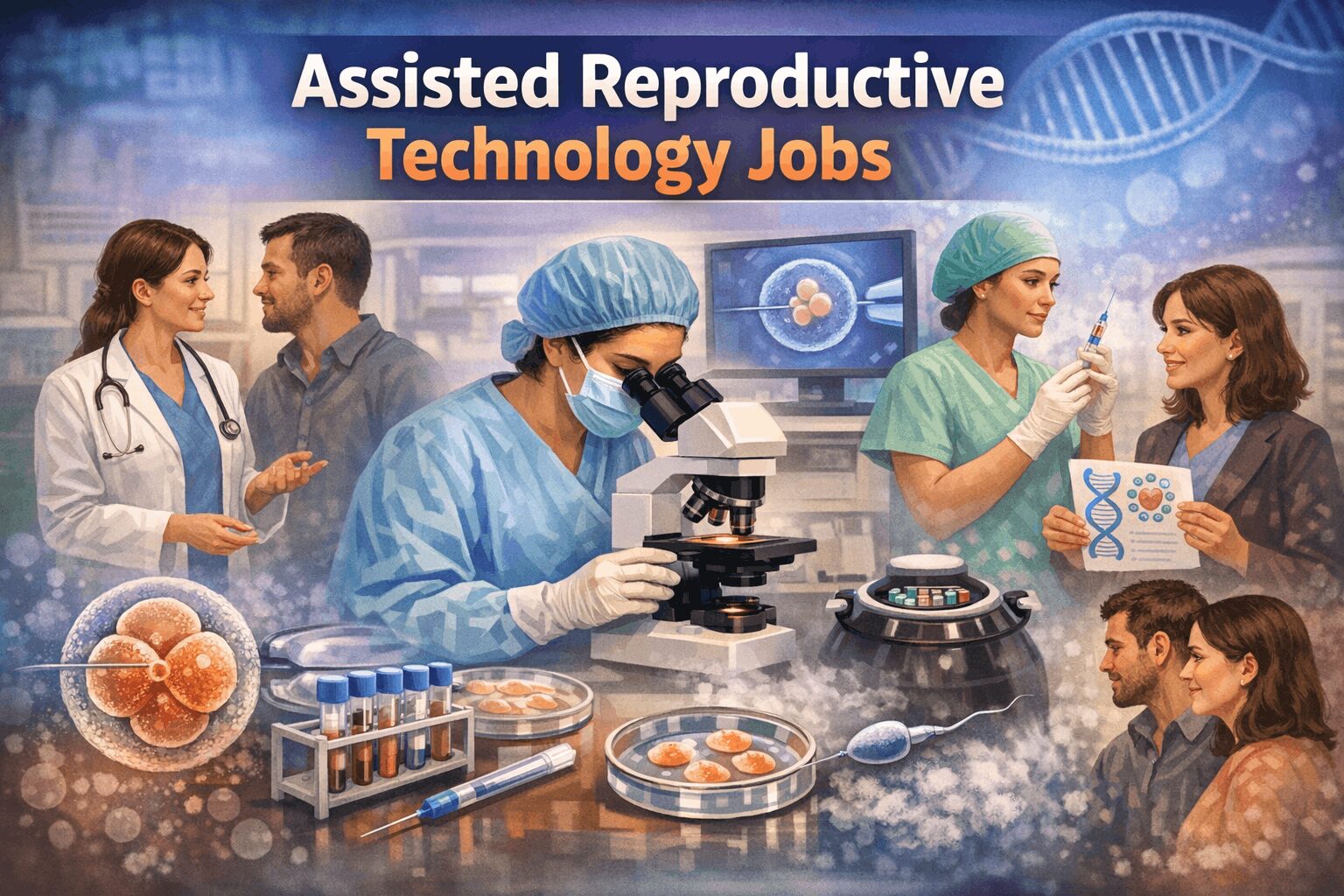
Assisted reproductive technology (ART) is basically the medical field that helps people have children when natural conception is difficult. Think IVF, fertility clinics, lab procedures… that kind of work.
And behind all of that, there are many different jobs. Not just doctors. An entire system of people working together.
Let’s break it down simply.
What is Assisted Reproductive Technology?
Earlier than jobs, you want a simple concept of the field.
Assisted reproductive technology (ART) includes scientific treatments that assist with fertility.
Common things you would possibly hear:
- IVF (In Vitro Fertilization)
- Egg freezing
- Sperm testing and preparation
- Embryo development in labs
So when we say assisted reproductive technology jobs, we mean all the careers connected to these processes.
Doctors, nurses, lab staff… even admin people.
Why This Field is Growing
There’s a reason more people are talking about it now.
A few simple points:
- People are delaying marriage and pregnancy
- Fertility issues are becoming more common
- IVF is more widely accepted now
- Technology has improved a lot
So clinics are expanding. And they need staff.
Not just one or two roles. A full team.
Types of Assisted Reproductive Technology Jobs
This is the main part. And honestly, there are quite a few roles here.
Let’s go one by one.
1. Fertility Doctor (Specialist)
This is the main medical role.
They handle:
- Patient diagnosis
- Treatment plans
- IVF procedures
- Medical decisions
To reach this level, you need full medical training plus specialization.
2. Embryologist
This is one of the most important lab roles.
They work directly with:
- Eggs
- Sperm
- Embryos
Basically, they help create and monitor embryos during IVF.
Very technical job. Very precise too.
One small mistake… and it matters.
3. IVF Nurse
These nurses are kind of the support system for patients.
They:
- Guide patients through treatment
- Explain procedures (a lot of explaining actually)
- Give injections or medication support
- Offer emotional support
And honestly, this role is very people-focused.
4. Andrology Technician
This is more lab-based work focused on male fertility.
They:
- Test sperm samples
- Prepare samples for IVF
- Record lab results
Not very known outside the field, but very important.
5. Lab Assistant
This is often an entry-level role.
They help with:
- Preparing lab tools
- Cleaning and organizing samples
- Supporting senior staff
Good starting point if you’re new.
6. Genetic Counselor
A bit more specialized.
They help couples understand:
- Genetic risks
- Test results
- Possible outcomes in embryos
This job needs extra training in genetics.
7. Clinic Staff / Coordinator
Not medical, but still important.
They handle:
- Appointments
- Patient records
- Communication between teams
Without them, clinics get messy fast.
Skills You Need (Realistically)
Not everything is technical. Some parts are very human.
Technical skills:
- Basic biology understanding
- Lab handling (for lab jobs)
- Attention to detail
- Following medical procedures
Soft skills:
- Communication (a big one)
- Emotional manipulate
- Patience
- Recognize for privateness
And honestly… patience is everything here.
Because patients are often stressed.
Education Requirements
This depends on what job you want.
Doctors:
- Medical degree (MBBS or equivalent)
- Specialization in fertility medicine
Lab roles:
- Biology, biotechnology, or life sciences degree
- Sometimes a master’s helps a lot
Nurses:
- Nursing diploma or degree
- Experience in women’s health is useful
Entry-level jobs:
- Science background is enough to start
- Training comes later on the job
So yeah, different paths.
How to Start Step by Step
If you’re critical about assisted reproductive technology jobs, here’s a simple route.
1: Choose your direction
Physician, nurse, lab, or admin. Decide early.
2: Study relevant subjects
Mostly biology or medical-related fields.
Nothing too fancy, just consistent learning.
3: Get some experience
Try:
- Internships
- Clinic training
- Hospital exposure
Even small experience helps.
4: Start applying
Begin with entry-level roles if needed.
No shame in starting small.
5: Grow into specialization
Over time, you can move into:
- IVF labs
- Embryology
- Fertility clinics
- Senior positions
It builds slowly.
Salary (Simple Idea)
Not exact numbers, but general idea:
- Entry roles: modest
- Nurses: medium range
- Embryologists: higher
- Fertility doctors: Very excessive
Essentially, the extra specialised you get, the higher the pay.
Challenges in This Career
Let’s be real… it’s not an “easy” field.
Some challenges:
- Emotional pressure from patients
- Long hours in clinics
- High responsibility in lab work
- Continuous learning needed
But still… many people stay in it.
Because it feels meaningful.
You’re helping people become parents. That stays with you.
Future of ART Jobs
This field is not slowing down.
Actually, it’s growing.
More clinics. More demand. More technology.
Areas like:
- IVF improvements
- Genetic testing
- Fertility preservation
are expanding quickly.
So yes, long-term career stability looks strong.
Who Should Consider This Field?
- You like biology or science
- You want healthcare work
- You’re okay with lab environments
- You can handle emotional situations
- You want meaningful work
If that sounds like you… it’s worth exploring.
FAQs
1. What are assisted reproductive technology jobs?
Jobs associated with fertility remedies like IVF, lab paintings, nursing, and reproductive medicinal drug.
2. Is that this an awesome career?
Yes, it’s growing and has strong demand in healthcare.
3. Do I need a medical degree?
Only for doctor roles. Other roles need science or nursing backgrounds.
4. Is the work stressful?
Sometimes yes, especially emotionally. But also rewarding.
5. Can beginners enter this field?
Yes, through lab assistant or support roles.
Conclusion
So, assisted reproductive technology jobs are basically a mix of scientific, lab, and help roles that each one work collectively in fertility treatment.
It’s no longer a easy field, but it’s an vital one.
And maybe that’s the best way to describe it… it’s science, but also very human at the same time.
People don’t just work here for money. A lot of them stay because it actually matters.