

Introduction
While people hear the name mike wolfe passion project, maximum without delay consider antiques, antique barns, rusty signs, and forgotten American records. And definitely, that’s not wrong. But it’s additionally now not the total picture.
Mike Wolfe is well known for his role in American Pickers, but his passion assignment goes beyond simply gathering antique objects. It’s extra approximately retaining memories, saving records that is slowly disappearing, and bringing life again to places that the general public could just ignore.
This article takes a deep, simple have a look at his passion undertaking — what it’s miles, why it topics, how it works, and what lessons regular human beings can take from it.
Allow’s break it down grade by grade.
What Is the Mike Wolfe Passion Project?
The mike wolfe passion project is not just one single business or show. It’s more like a combination of ideas, creative work, and preservation efforts.
At the core, it focuses on:
- Restoring old buildings and spaces
- Preserving American history and culture
- Collecting and saving antiques
- Supporting small-town revival
- Telling stories behind forgotten objects
It’s not simply “shopping for antique matters.” It’s more like giving antique things a second lifestyles.
And perhaps that’s the element people connect to the most.
Why This Passion Project Exists
Mike Wolfe didn’t start with a big corporate plan. It started with curiosity. Simple curiosity.
He used to look at old items and wonder:
- Who used this?
- What story does it carry?
- Why was it left behind?
Over time, that interest changed into some thing larger.
Main reasons behind the passion project:
- Protecting disappearing history
- Saving abandoned or forgotten places
- Helping nearby groups
- Encouraging appreciation for craftsmanship
- Retaining American heritage alive
There’s also something emotional about it. It’s not always about money or business growth. Sometimes it’s just about meaning.
The Core Idea Behind the Project
If we simplify it, the idea is simply very sincere.
Old things still matter.
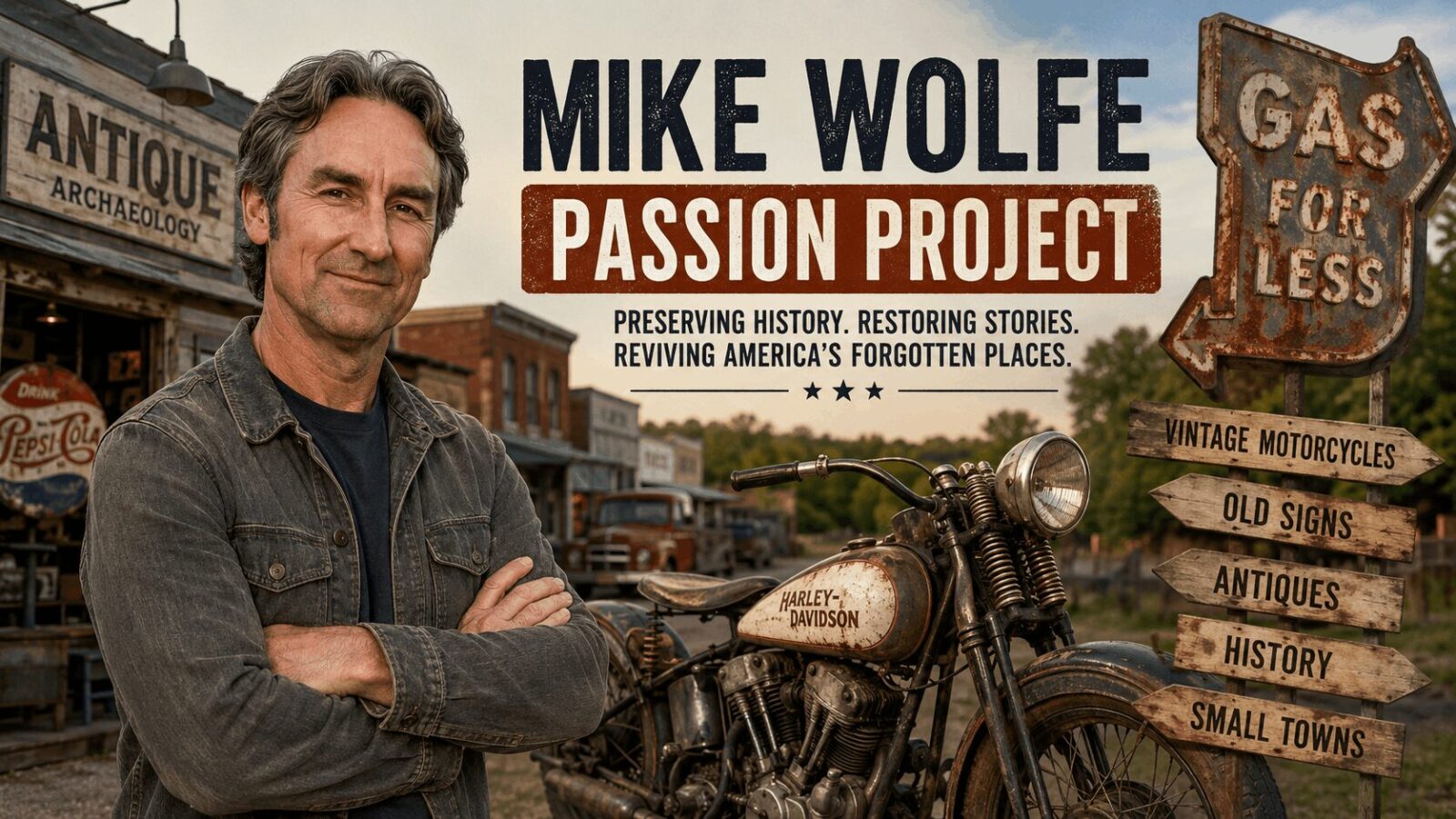
A rusty motorcycle, a broken sign, an abandoned gas station — these are not just “junk” in Mike Wolfe’s view. They are pieces of history.
And instead of letting them disappear, the passion project tries to:
- Restore them
- Document them
- Reuse or display them
- Tell their story
It’s a mix of preservation and storytelling.
Key Parts of the Mike Wolfe Passion Project
The project isn’t one single activity. It has different layers.
Antique Collection and Preservation
A major part of the mike wolfe passion project is collecting antiques.
But it’s not random collecting. There is intention behind it.
Typical items include:
- Vintage motorcycles
- Old signage
- Tools and machinery
- Historical artifacts
- Americana collectibles
Each item usually has a backstory attached to it.
Occasionally it’s about the person who used it. Now and again it’s about the location it came from.
Restoring Old Buildings and Spaces
Another major focus is restoring old structures.
Instead of tearing them down, the idea is:
- Fix them
- Preserve their original look
- Reuse them for modern purposes
This helps keep local history alive in a very visible way.
You might see:
- Old stores turned into creative spaces
- Historic buildings repurposed
- Small-town properties revived
It’s like giving forgotten places a second chance.
Supporting Small Towns
Small towns are a big part of the passion project.
Many rural places in the U.S. struggle with:
- Population decline
- Closing businesses
- Lack of tourism
The project tries to bring attention back to them.
How?
- Restoring buildings
- Highlighting local stories
- Encouraging visitors
- Supporting small businesses
It’s slow work. Not instant results. But meaningful.
Storytelling Through Objects
One unique part of the project is storytelling.
Every object has a story, even if people forget it.
For example:
- A gas station sign might represent a road trip era
- A motorcycle might represent freedom in a certain decade
- A tool might show how people worked in the past
The idea is easy:
In case you store the object, you also store the tale.
How the Passion Project Actually Works (Step-by-Step)
Permit’s break it down in a easy float.
1: Finding Hidden Items
Items are usually found in:
- Old barns
- Flea markets
- Private collections
- Small towns
- Abandoned properties
This part requires patience. A lot of it.
2: Evaluating the Item
Not everything is taken.
Each item is checked for:
- Historical value
- Condition
- Story behind it
- Restoration potential
Some items are rare, others are just interesting.
3: Restoration Process
If an item is selected, it may go through restoration.
This can include:
- Cleaning
- Repairing broken parts
- Preserving original paint or structure
- Mechanical fixing (for vehicles)
The goal is not to make it “new.”
The goal is to keep it authentic.
4: Display or Use
After restoration, items may be:
- Displayed in collections
- Used in creative spaces
- Shared in exhibitions
- Preserved for storytelling
Sometimes they become part of public viewing spaces.
Mike Wolfe Passion Project vs Regular Collecting
People often confuse collecting with preservation. But there is a difference.
| Aspect | Regular Collecting | Mike Wolfe Passion Project |
|---|---|---|
| Purpose | Personal interest | Historical preservation |
| Focus | Value or rarity | Story and meaning |
| Outcome | Storage or resale | Restoration and display |
| Community impact | Limited | Strong local impact |
| Approach | Private | Public storytelling |
So yeah, it’s not just collecting things. It’s more intentional.
Why People Connect With This Project
There’s a reason the mike wolfe passion project gets attention online.
It feels real.
In a world full of digital everything, this is something physical:
- Old metal
- Dusty roads
- Real stories
- Forgotten places
People connect with that simplicity.
It also brings nostalgia. Even if you didn’t stay in the ones eras, you may experience the emotion at the back of them.
Challenges Behind the Passion Project
It’s not all easy. Not even close.
Finding Good Items Is Hard
Many valuable items are already lost or damaged beyond repair.
Restoration Takes Time and Money
Fixing old items is:
- Slow
- Expensive
- Once in a while unpredictable
You don’t constantly recognise what you’ll locate internal an vintage item.
Weather and Decay Problems
Old buildings and items are often:
- Rusted
- Broken
- Structurally weak
So preservation becomes tricky.
Balancing Business and Passion
There is also the reality of managing:
- TV work
- Businesses
- Projects
- Travel
It’s a lot to handle at once.
Lessons From the Mike Wolfe Passion Project
Even if you are not into antiques, there are lessons here.
1. Everything Has Value (Even Old Things)
Sometimes value is not obvious at first.
2. Stories Matter More Than Objects
The meaning behind something is often more powerful than the object itself.
3. Preservation Is Important
Not everything old should be thrown away.
4. Patience Is Key
Good things take time. Especially restoration work.
5. Small Efforts Can Impact Communities
One restored building can change a whole area.
Impact on Culture and Communities
The passion project also influences how people see history.
Instead of ignoring old places, more people start to:
- Appreciate heritage
- Visit small towns
- Support local businesses
- Learn historical stories
It creates a ripple effect.
Even small recuperation initiatives can deliver interest returned to forgotten areas.
Why This Project Still Matters Today
In modern times, everything moves fast:
- Digital content
- New technology
- Fast consumption culture
But projects like this slow things down a bit.
They remind people:
- History is still here
- Stories still exist
- Old things still matter
And that balance is important.
FAQs About Mike Wolfe Passion Project
What is the Mike Wolfe passion project?
It’s miles a mix of antique maintenance, recovery paintings, and storytelling targeted on American history and small-city culture.
Is Mike Wolfe simplest an vintage collector?
No, his work goes beyond collecting. It also includes restoring buildings and preserving cultural history.
Why is the passion project important?
Because it helps save historical items and supports awareness of forgotten places and stories.
Does the project involve TV work?
Yes, parts of it are connected to his public work and media presence, but the passion project itself is broader.
What kind of items are collected?
Mainly antiques like signs, motorcycles, tools, and historical Americana objects.
How does recovery paintings in the assignment?
Gadgets are repaired, cleaned, and preserved even as retaining their original character intact.
Conclusion
The Mike Wolfe passion project isn’t always just about antiques or amassing antique items. It’s truely approximately that means, memory, and maintenance.
Mike Wolfe uses his work to highlight something easy however effective — that records is anywhere, from time to time hidden in places people forestall noticing.
Old buildings, rusty signs, forgotten tools… they all carry stories. And instead of letting them disappear, this project gives them another chance.
In a fast-moving world, that idea feels important. Maybe even necessary.
And that’s probably why so many people continue searching, reading, and connecting with the mike wolfe passion project today.