

Introduction
Each year, companies set goals to grow, continue to exist, and compete inside the marketplace. These goals are normally referred to as organisation goals. But in current discussions, a odd however interesting time period is appearing: none company objectives 2025.
At first, it sounds confusing. Does it mean companies have no goals at all? Or does it refer to a new business mindset where traditional objectives are removed or replaced?
In simple terms, this concept is about companies that are either:
- Operating without fixed traditional objectives
- Or shifting away from rigid yearly planning
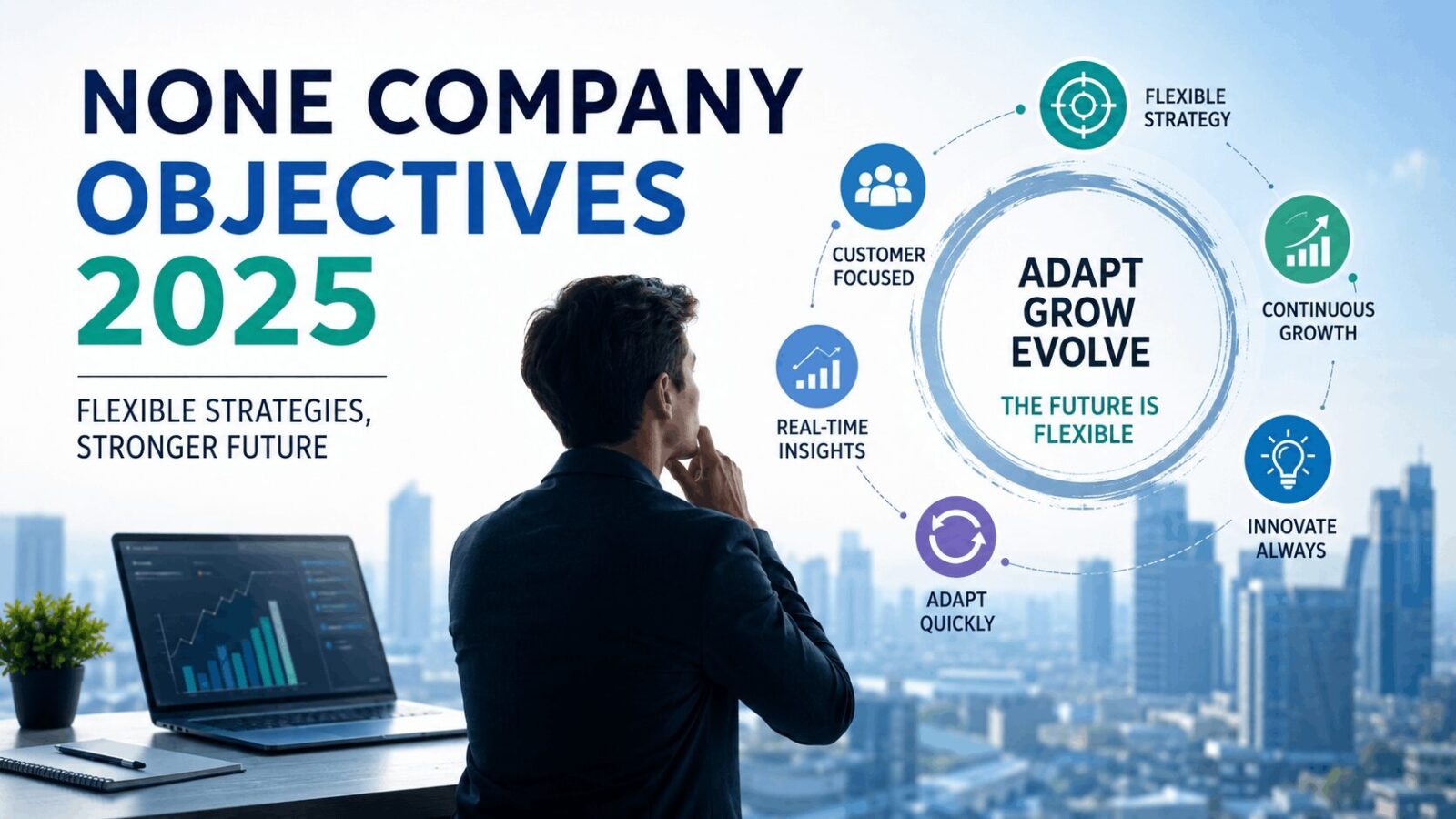
- Or focusing on flexible, adaptive strategies instead of strict targets
In this article, we will break down what none company objectives 2025 could mean, why it is being discussed, and how modern businesses are changing their planning style.
What Does “None Company Objectives 2025” Mean?
Basic Explanation
The phrase none company objectives 2025 is not a standard business term. But it can be understood as a concept where companies:
- Do not follow strict yearly objectives
- Focus more on flexible direction instead of fixed targets
- Adapt continuously in place of sticking to inflexible plans
In contemporary business environments, things alternate very fast. So in place of putting strict lengthy-term objectives, a few groups decide upon flexible systems.
Simple Meaning
It basically reflects a mindset like:
“We don’t rely only on fixed objectives anymore. We adapt as we grow.”
This approach is becoming more common in fast-moving industries like:
- Technology
- Startups
- Digital marketing
- E-commerce
Why Companies Are Moving Away from Strict Objectives
Organizations these days are very exceptional from 10–15 years in the past. Markets trade fast, and client conduct shifts even faster.
1. Fast Market Changes
Traits can upward push and fall within months. Constant every year desires every now and then turn out to be previous fast.
2. Technology Disruption
AI, automation, and digital tools change business models hastily.
3. Global Competition
Agencies are no longer competing locally—they compete globally.
4. Uncertainty in Economy
Inflation, deliver chain problems, and worldwide events have an effect on making plans.
Because of those motives, a few businesses decide upon flexibility over strict goals.
Traditional Company Objectives vs Modern Approach
To understand none company objectives 2025, it helps to compare old vs new thinking.
Comparison Table
| Aspect | Traditional Objectives | Modern Flexible Approach |
|---|---|---|
| Planning style | Fixed yearly goals | Adaptive direction |
| Flexibility | Low | High |
| Response to change | Slow | Fast |
| Risk handling | Limited adjustment | Continuous adaptation |
| Focus | Targets & numbers | Growth & learning |
This shift shows why companies are rethinking old systems.
How “None Company Objectives” Work in Practice
Even if companies say they don’t follow strict objectives, they still have direction.
1: Set General Vision
Instead of strict targets, companies define:
- Purpose
- Long-term vision
- Core values
2: Continuous Evaluation
Performance is checked regularly instead of yearly reviews.
3: Flexible Adjustments
Strategies are changed based on:
- Market demand
- Customer feedback
- Competition
4: Short-Term Goals Only
Instead of yearly rigid goals, companies focus on:
- Weekly targets
- Monthly improvements
- Real-time performance
Advantages of Having No Fixed Company Objectives
This approach has some interesting benefits.
1. More Flexibility
Companies can quickly change direction when needed.
2. Better Adaptation
They respond faster to market changes.
3. Less Pressure on Teams
Employees are not forced into rigid yearly targets.
4. Encourages Innovation
Teams can test extra freely.
5. Real-Time Growth Tracking
Progress is measured continuously, now not just as soon as a 12 months.
Disadvantages of No Clear Objectives
But this approach also has challenges.
1. Lack of Direction
Without clear goals, teams may feel confused.
2. Hard to Measure Success
No fixed targets can make performance tracking difficult.
3. Risk of Poor Planning
Without structure, long-term planning may suffer.
4. Employee Uncertainty
Workers may not understand expectations clearly.
So balance is very important.
Why 2025 Is Important for This Concept
The year 2025 is being visible as a turning point for modern business fashions.
Key Reasons:
- AI-driven decision making is increasing
- Remote and hybrid work is now normal
- Automation is replacing manual processes
- Agencies have become extra records-pushed
Due to this, agencies are rethinking how they set goals.
Industries Where This Approach Is Common
Not all industries comply with this idea, but a few are more flexible.
Technology Companies
They constantly update merchandise and techniques.
Startups
Startups regularly exchange route based on market comments.
Digital Marketing Agencies
Campaigns trade day by day based on overall performance information.
E-commerce Platforms
Pricing, merchandise, and strategies trade speedy.
Real-World Example Scenario
Consider a tech startup in 2025.
In preference to pronouncing:
They could say:
- We will improve user experience continuously
- We will test new features regularly
- We will scale based on demand
This is a more flexible approach aligned with none company objectives 2025 thinking.
Step-by-Step Strategy for Companies Using This Model
If a organisation follows this method, it usually works like this:
1: Define Purpose
What is the company looking to acquire typical?
2: Identify Key Areas
Recognition areas may consist of:
- Customer satisfaction
- Product quality
- Innovation
3: Track Real-Time Data
Use analytics tools to screen overall performance.
4: Adjust Continuously
Make changes whenever needed.
5: Avoid Rigid Annual Targets
Focus more on adaptability than fixed numbers.
Table: Traditional vs None Objective Model
| Factor | Traditional Model | None Objective Model |
|---|---|---|
| Planning | Yearly fixed plan | Continuous planning |
| Goals | Specific numbers | Flexible outcomes |
| Adaptation | Slow | Fast |
| Risk | Higher in change situations | Lower due to flexibility |
| Innovation | Limited | Encouraged |
Challenges Companies May Face in 2025
Even modern systems aren’t best.
1. Data Overload
An excessive amount of information can confuse selection-making.
2. Lack of Structure
Teams may struggle without clear direction.
3. Leadership Pressure
Managers must make faster decisions.
4. Balancing Flexibility and Control
Too much freedom can reduce focus.
Future of Company Objectives Beyond 2025
The trend suggests that companies will continue moving toward:
- AI-based decision systems
- Real-time planning models
- Adaptive business strategies
- Hybrid goal-setting systems
Instead of fully removing objectives, companies may combine:
- Flexible goals
- Data-driven adjustments
- Short-term planning cycles
FAQs
What does none company objectives 2025 mean?
It refers to a flexible business approach where companies do not rely on strict yearly objectives.
Do companies really operate without objectives?
Most companies still have direction, but they may avoid rigid fixed targets.
Why are companies changing their planning methods?
Because markets are changing quicker due to generation and worldwide opposition.
Is this approach precise for all agencies?
No, it works better for flexible industries like tech and startups.
What is the biggest benefit of this model?
The biggest benefit is adaptability to fast-changing conditions.
Conclusion
The concept of none company objectives 2025 displays how modern organizations are evolving.
As opposed to relying most effective on strict every year objectives, corporations at the moment are specializing in flexibility, adaptability, and actual-time choice-making.
This does not imply companies don’t have any course. It actually approach they may be converting how they plan and develop.
In a fast-transferring global, rigid systems regularly fail. Bendy techniques, then again, help organizations live to tell the tale and develop in unsure conditions.
And as we move in the direction of 2025, this shift is probably to end up even extra commonplace throughout industries.