

Introduction
So yeah… let’s talk about something called Video&A.
Surely, the call sounds a piece bizarre at the start. Like… what even is that? A software? A feature? A tool?
Well, it’s kind of all of that in a way.
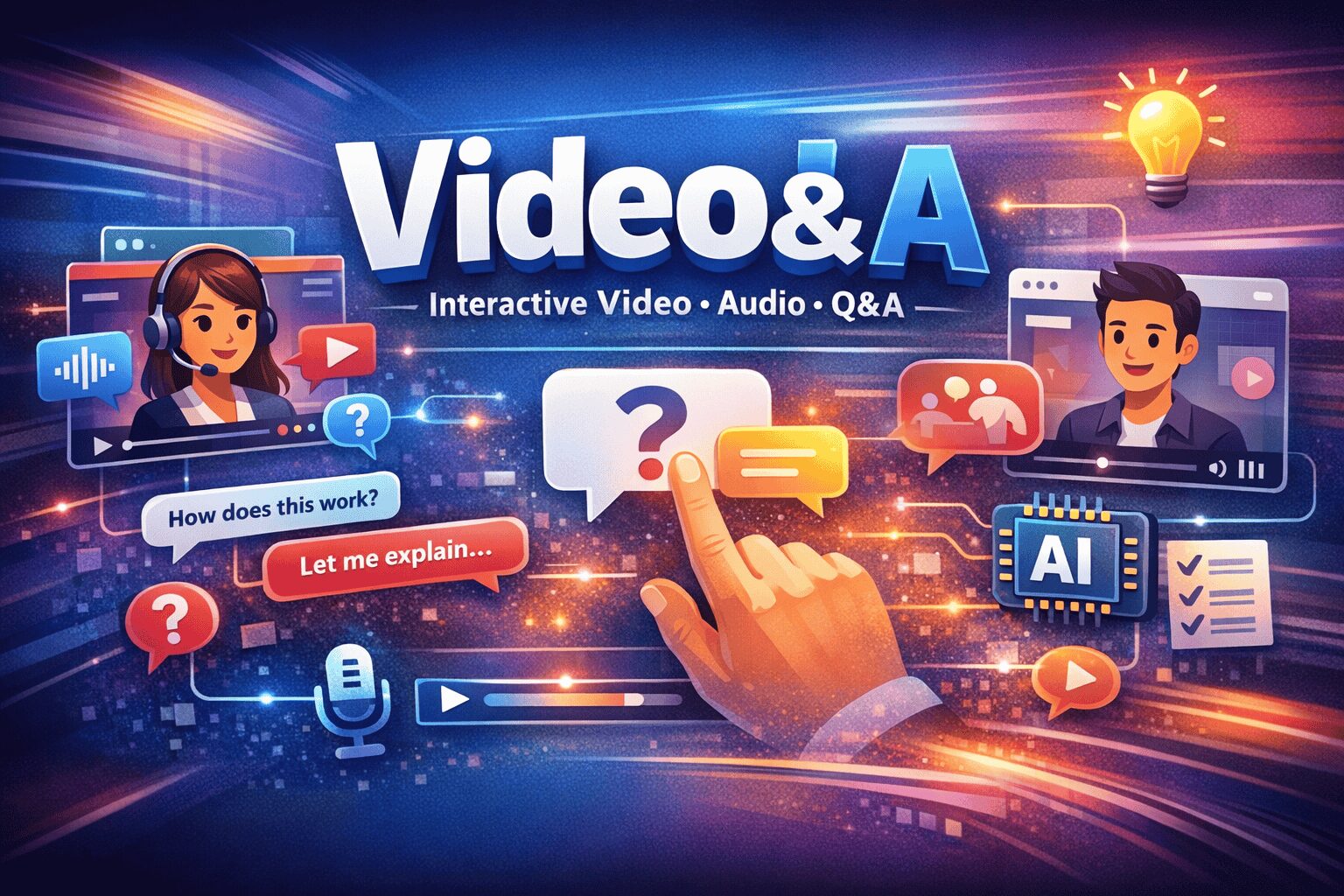
Video&A is basically a modern idea where video is mixed with audio and Q&A interaction. And people are also calling it video&a interactive video audio q&a technology (yeah, long name… I know).
But don’t fear. It’s no longer as complex because it sounds.
So what is Video&A actually?
In simple words:
Video&A is when a video is not just something you watch… but something you can actually interact with.
Like:
- You watch a video
- You hear explanations (audio)
- You ask questions
- And you get answers
That’s it. That’s the core idea.
It turns normal video into something more alive… more responsive.
Why people are talking about it
Now you might be thinking, why even bother changing normal videos?
Good question.
Because regular videos are… well, one-way.
You just sit and watch.
But with Video&A:
- You can interrupt the flow (in a good way)
- Ask questions when you don’t understand something
- Get answers without leaving the video
It feels more like talking to someone instead of just watching a screen.
How Video&A works (simple breakdown)
Allow’s no longer overcomplicate it.
Here’s the way it commonly goes:
Step 1: Video is created
Someone records a normal video, like a tutorial or explanation.
Step 2: Audio is added
There’s narration or spoken explanation included.
Step 3: Q&A layer is built in
This is where things get interesting.
Users can ask questions like:
- “What does this mean?”
- “Can you repeat that?”
- “Show another example”
Step 4: System responds
Now the system replies. Could be:
- AI response
- Pre-written answers
- Or guided explanations
And yeah, it feels interactive.
What makes Video&A different?
The main difference is simple:
Normal video = passive
Video&A = interactive
You’re not just watching anymore.
You’re kind of participating.
Even if it’s small interaction, it changes the whole experience.
Where this technology is used
This isn’t just some random idea. It’s actually being used in a few places.
Education
Probably the biggest one.
Students can:
- Ask questions during lessons
- Get instant explanations
- Learn at their own pace
And honestly, it helps a lot for confusing topics.
Training in companies
Companies use it for:
- Employee onboarding
- Skill training
- Product explanations
Instead of boring manuals, people just watch and interact.
Customer support
Some brands use Video&A style systems for:
- Product help videos
- Troubleshooting guides
- Step-by-step support
So users don’t have to Google everything.
Marketing (a bit sneaky but useful)
Brands also use it to:
- Explain products better
- Keep users engaged longer
- Answer objections directly
Basically… better sales experience.
Why Video&A is becoming popular
There are a few simple reasons:
1. People don’t like passive learning anymore
Nobody wants to just sit and watch for long.
2. Instant answers feel better
If you have a question, you want it now… not later.
3. It feels more personal
Although it’s AI, it looks like a person is speaking again.
4. Better understanding
When you can ask questions instantly, things just click faster.
Real-life example (easy one)
Imagine this:
You’re watching a cooking video.
Normally:
- You watch silently
- Maybe rewind if you miss something
With Video&A:
- You ask “how much salt?”
- You ask “can I replace this ingredient?”
- You get answers right there
Much smoother, right?
Benefits of Video&A technology
Let’s keep it simple:
- Easier to understand content
- More engaging than normal videos
- Saves time searching for answers
- Better for learning
- Feels more interactive and alive
Not perfect… but definitely useful.
A few problems too (because nothing is perfect)
Yeah, there are some issues:
- It’s not super cheap to build
- Needs strong tech setup
- Sometimes depends on internet quality
- Not every video needs interaction
So it’s not replacing normal videos anytime soon.
Just… improving them.
Future of Video&A (what it might become)
Video&A could turn into:
- Fully AI-powered tutors in videos
- Real-time conversation while watching content
- Personalized learning videos
- Smart assistants inside video players
Basically, videos that “talk back” properly.
Kind of wild when you think about it.
FAQs
What is Video&A?
It’s a system where video, audio, and Q&A interaction are combined into one experience.
What does video&a interactive video audio q&a technology mean?
It refers to technology that lets users interact with videos by asking questions and receiving responses.
Is Video&A the same as normal video?
No. Normal video is one-way. Video&A allows interaction.
Where is it used most?
Basically in education, training, customer support, and advertising.
Do I want special apps to apply it?
Every so often yes, on occasion no. It depends at the platform.
Conclusion
So yeah… that’s Video&A.
Nothing too scary or overly technical.
It’s just a new way of making videos more interactive by mixing video, audio, and Q&A together.
And honestly, it makes sense. Because people don’t just want to watch anymore…
They want to ask, interact, and get answers while they learn.
That’s basically the whole idea of video&a interactive video audio q&a technology.
Simple, but pretty powerful if you think about it.