

Introduction
If you’ve ever watched an artist turn a difficult comic strip into something that appears almost actual, you’ve already seen rendering in motion.
Plenty of beginners listen the term and get harassed. It sounds technical, maybe even complex. But truely, it’s now not that frightening.
So, what is rendering in art?
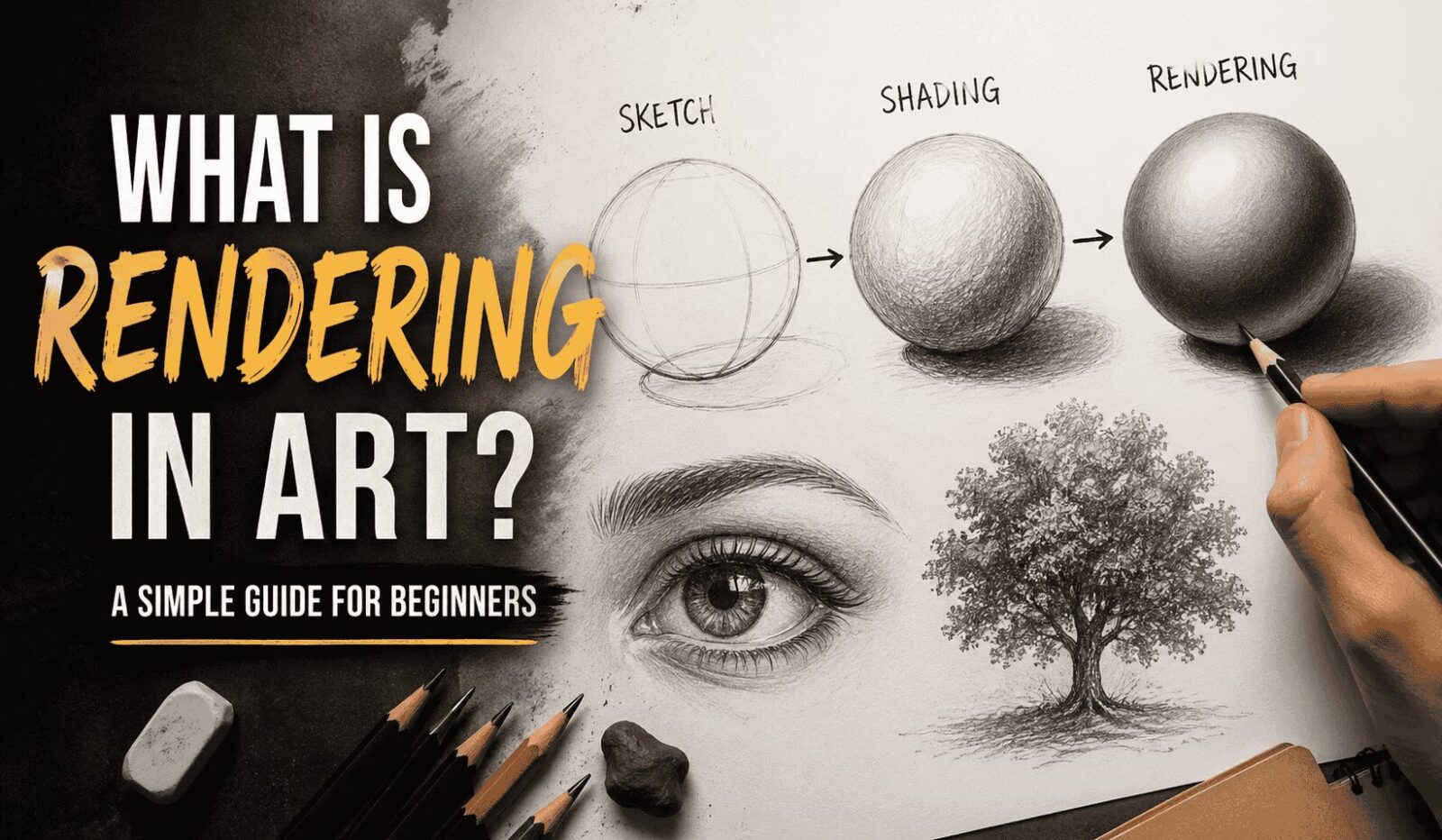
In the simplest manner possible, rendering method adding intensity, shadows, texture, and detail to an art work so it feels more completed. It’s the level in which a flat drawing starts searching alive.
A simple outline of a face can come to be a realistic portrait. A circle can begin to look like a round ball. A simple tree cartoon can all at once sense full of bark, leaves, and sunlight.
That’s rendering.
Let’s break it down properly.
What Is Rendering in Art?
Rendering in art is the process of growing an picture after the comic strip stage. Artists use shading, lighting, texture, contrast, and small info to make bureaucracy look believable.
Think about it like this:
- Sketching gives structure
- Rendering gives life
Without rendering, many drawings look unfinished. With rendering, they feel complete.
Sometimes highly realistic. Sometimes stylized. Depends on the artist.
What Is Rendering in Art Drawing?
Many humans seek what is rendering in art drawing because rendering is commonly utilized in pencil artwork.
In drawing, rendering generally approach the usage of graphite, charcoal, or ink to construct tones and shadows. You slowly flip linework into form.
For example, allow’s say you draw an apple.
First, it’s just an outline.
Then you add:
- darker shadow on one side
- soft middle tones
- a bright highlight
- texture spots
- shadow under the apple
Now it looks real.
That transformation? Yep, rendering.
Why Rendering Is Important
Rendering topics as it helps humans apprehend what they’re seeing.
A flat shape is one factor. A believable object is any other.
Good rendering can:
- Add depth
- Show material (metal, skin, cloth, wood)
- Create mood
- Improve realism
- Make art look polished
- Guide the viewer’s eye
Even simple cartoon styles use some level of rendering.
Sometimes very subtle.
What Artists Usually Render
Artists often focus rendering on areas that matter most.
These can include:
- Faces
- Hands
- Hair
- Clothing folds
- Reflections
- Skin texture
- Background atmosphere
- Light effects
Not everything needs equal detail, by the way. That’s a beginner mistake.
Main Parts of Rendering
To understand rendering better, you should know these basics.
Light Source
Where is the light coming from?
Top left? Right side? Behind the subject?
Everything depends on that.
Shadow
Areas where light does not reach become darker.
Midtones
These sit between light and dark.
Highlight
Brightest spots where light hits strongest.
Texture
This shows if something is rough, smooth, shiny, soft, old, etc.
Edges
Some edges are sharp. Others soft.
That small difference can change everything.
Step-by-Step: How Rendering Works
If you’re a beginner, this is a simple workflow.
1. Make a Good Sketch First
Rendering can’t fully save bad proportions. Start clean.
2. Choose Your Light Direction
Very important. Seriously.
Pick one clear light source.
3. Block Big Shadows First
Don’t jump into eyelashes before shadows.
Work large to small.
4. Add Midtones
Blend lighter and darker areas together.
5. Place Highlights
Use these carefully. Too many highlights looks weird.
6. Add Texture
Skin pores, fabric folds, hair strands, wood grain, etc.
7. Final Adjustments
Increase contrast where needed. Sharpen focus areas.
Done.
Well… mostly done. Artists always keep tweaking.
What Is Rendering in Art Latest Trends?
Some people search what is rendering in art latest because styles keep changing online.
And yes, modern rendering looks different from older classical methods.
Current trends include:
- Soft cinematic lighting
- Semi-realistic portraits
- Painterly brush textures
- Stylized anime rendering
- 3D-inspired shading
- Fast social media speedpaints
- AI-assisted references
A lot of artists today mix realism with style instead of chasing perfect realism.
Honestly, it looks more interesting sometimes.
Traditional vs Digital Rendering
Both are useful. Both teach skill.
| Traditional | Digital |
|---|---|
| Pencil, charcoal, paint | Tablet and software |
| Harder to undo mistakes | Easy undo |
| Natural textures | Infinite brushes |
| Slower workflow | Faster workflow |
| Great for fundamentals | Great for production |
Neither is “better” for everyone.
Use what fits you.
Common Rendering Techniques
Artists use many methods.
Hatching
Lines placed close together to create value.
Cross-Hatching
Lines crossing over each other.
Blending
Smooth shading transitions.
Layering
Building tones slowly.
Smudging
Soft shadows with charcoal or graphite.
Brush Rendering
The use of digital or paint brushes to form bureaucracy.
Beginner Mistakes to Avoid
Almost everyone does these.
Rendering Too Early
Fix the sketch first.
Weak Contrast
If everything is medium gray, art looks dull.
Overblending
Makes surfaces muddy.
Random Shadows
Shadows must follow light source.
Detailing Everything
The eye needs rest areas too.
Ignoring Structure
A badly drawn nose with amazing shading is still a badly drawn nose.
Harsh but true.
How to Practice Rendering Faster
You don’t need fancy ideas. Practice basics.
Daily Practice Ideas
- Shade spheres
- Draw cubes under lamp light
- Render fruit
- Study faces in black and white
- Practice cloth folds
- Draw hands with shadows
Good Habit
Spend 20 minutes observing real light every day.
Look at cups, walls, your hand, shoes. Notice shadows.
That helps more than people think.
What Is Rendering in Art Reddit Opinions?
Many search what is rendering in art reddit because art communities often explain things honestly.
Common advice from artists there includes:
- Fundamentals matter more than detail
- Rendering cannot fix bad anatomy
- Learn values first
- Don’t over-render everything
- Use references without shame
- Speed comes later
And honestly, that’s solid advice.
Does Rendering Mean Realism Only?
No. Big misunderstanding.
Rendering does not always mean hyperrealism.
Even stylized art uses rendering:
- Anime cel shading
- Comic shadows
- Cartoon lighting
- Fantasy glow effects
- Simplified game art
Rendering simply means developing forms visually.
Realism is only one version.
How Long Does Rendering Take?
Depends on style.
Very rough estimate:
- Quick sketch render: 15 minutes
- Portrait study: 1 to 3 hours
- Detailed artwork: 5+ hours
- Professional illustration: days sometimes
Some artists spend forever adjusting tiny areas.
Others stop fast.
Both can work.
Best Tools for Rendering Practice
Traditional
- HB to 8B pencils
- Charcoal
- Blending stump
- Kneaded eraser
- Sketchbook
Digital
- Procreate
- Photoshop
- Krita
- Clip Studio Paint
- Drawing tablet
Use simple tools first. Fancy brushes won’t replace skill.
Helpful Tips for Better Rendering
- Squint your eyes to see values clearly
- Work from big shapes first
- Use references often
- Compare dark vs light constantly
- Keep highlights limited
- Don’t zoom in too much (digital artists know this pain)
- Stop before overworking it
Sometimes one more adjustment ruins the piece.
FAQs
What is rendering in art?
Rendering is adding shading, light, texture, and element to make artwork appearance greater finished and realistic.
What is rendering in art drawing?
It approach the use of pencil, charcoal, or ink shading to turn a caricature into a greater whole drawing.
Is rendering necessary?
Not always. Some styles stay simple. But it’s a valuable skill.
Can beginners learn rendering?
Yes, definitely. Start with basic shapes and one light source.
Is rendering hard?
At first, maybe a little. But it gets easier with practice.
Does digital art use rendering?
Yes, all the time.
Conclusion
So now you know what is rendering in art.
It’s the system of taking a flat comic strip and giving it depth, mild, texture, and life. Whether or not you’re doing pencil paintings, portray, or digital art, rendering allows ideas feel real.
If you searched what is rendering in art drawing, it mostly refers to shading and value work. If you looked for what is rendering in art latest, today’s artists are blending realism with style in really creative ways. And if you checked what is rendering in art reddit, you’ll notice most artists agree on one thing:
Learn fundamentals first.
Then render.
Take your time. Practice simple objects. Mess up a few times. That’s normal.
Honestly, every good artist started there too.