

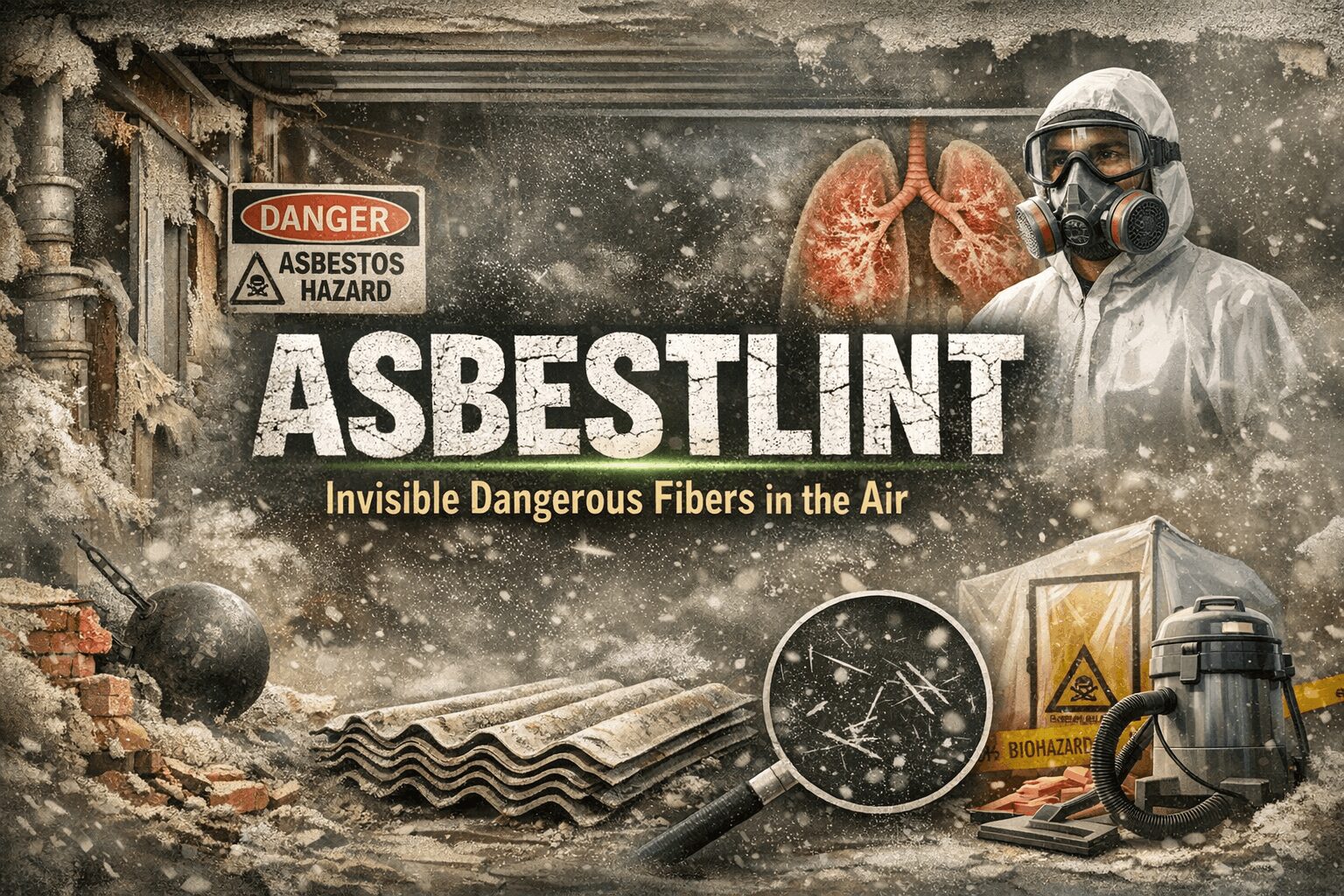
Introduction
So let’s talk about this word “asbestlint”. You might have seen it online, maybe in some blog, maybe in a comment section somewhere random. And really, it’s not a widespread medical term, however humans nevertheless use it.
Typically it factors in the direction of some thing related to asbestos-like dust or fibrous lint particles. Tiny stuff. So small you barely notice it… until it becomes a problem.
And yeah, it can be a problem.
In this article, I’ll break it down in a very simple way. No heavy science talk. Just real explanations, examples, and what you should actually do if you ever come across it.
What is Asbestlint (in simple words)?
Let’s not overcomplicate it.
Asbestlint is generally used to describe:
- Very fine, dust-like fibers
- Lint or particles that behave like asbestos
- Tiny airborne fibers from old materials
- Dust that may come from insulation, construction, or damaged old surfaces
It’s not an official scientific label, more like an informal internet term.
But the idea behind it is important.
Basically:
It refers to “dangerous-looking or asbestos-like lint that floats in air and can be inhaled.”
Simple enough.
Why people talk about Asbestlint
Now you may wonder, why even name it this way?
Well, people use the word when they are talking about:
- Old dusty buildings
- Renovation work
- Broken insulation material
- Suspicious fiber dust
- Industrial waste particles
Sometimes people don’t know the exact term “asbestos fibers,” so they just say “asbestlint.”
Kind of a slang version, you can say.
Not official, but widely used in discussions.
Where does Asbestlint come from?
This is important, because source matters a lot here.
Asbestlint-type fibers usually come from old or damaged materials.
Common sources include:
- Old house insulation
- Cement sheets used in older construction
- Ceiling tiles in old buildings
- Pipes wrapped in insulation
- Brake pads in older vehicles
- Industrial fireproof fabrics
- Demolition dust from old structures
And sometimes it appears during:
- Renovation work
- Wall breaking or drilling
- Roof removal
- Factory maintenance work
Basically, whenever old materials get disturbed.
Why is Asbestlint dangerous?
Now this is where things get serious.
The main issue is not what it looks like.
It’s what happens when you breathe it in.
These fibers are:
- Extremely small
- Lightweight
- Able to stay in air for a long time
- Easy to inhale without noticing
Once inside the lungs, they don’t just disappear easily.
Possible health risks include:
- Constant coughing (long-time period)
- Chest tightness
- Breathing difficulty
- Lung irritation
- Scarring in lungs (asbestosis)
- Higher risk of lung cancer
- Mesothelioma (rare but serious disease related to asbestos publicity)
Now not every exposure leads to sickness, but repeated exposure over the years increases risk.
That’s the key point.
Asbestlint vs normal household dust
People from time to time confuse regular dust with risky fibers. That’s not the equal factor.
Right here’s a simple contrast:
| Feature | Normal Dust | Asbestlint (asbestos-like fibers) |
|---|---|---|
| Appearance | Visible, grey dust | Often invisible or fine fibers |
| Behavior | Settles quickly | Can stay floating longer |
| Source | Dirt, skin, fabric | Old construction materials |
| Health risk | Mild irritation | Serious long-term disease risk |
| Cleanup | Easy cleaning | Requires special handling |
So yeah, not the same category at all.
Can you see Asbestlint?
Honestly… not really.
That’s one of the dangerous parts.
You usually cannot identify it just by looking.
It may:
- Float in air like normal dust
- Sit on surfaces unnoticed
- Mix with other debris
So people often only realize the risk after testing or inspection.
How people usually discover it
In real life, it’s often found during:
- Home renovation projects
- Old building demolition
- Factory inspection
- Maintenance of old pipelines
- Air quality testing
Sometimes workers open a wall… and suddenly dust appears. That’s when suspicion starts.
But again, only lab testing can confirm it properly.
What you should NOT do if you suspect Asbestlint
This is important. Like seriously.
If you think there’s asbestos-like dust around, don’t just start cleaning it casually.
Avoid this:
- Don’t sweep it
- Don’t vacuum it with normal vacuum
- Don’t shake fabrics or materials
- Don’t drill or break nearby surfaces
- Don’t try to “check it yourself” too much
Because that can release more fibers into air.
What you SHOULD do instead
Let’s make it simple.
Step-by-step safe approach:
1. Stop activity immediately
Just pause everything in that area.
2. Avoid disturbing dust
No movement, no cleaning.
3. Keep the area closed
If possible, seal it off.
4. Wear protection if you must enter
- Proper mask (not simple cloth mask)
- Gloves
- Covered clothing
5. Call professionals
Asbestos inspection teams or certified cleaners.
That’s really the safest path.
How professionals handle Asbestlint
When experts come in, they don’t just “clean it normally.”
Typical procedure:
| Step | What happens |
|---|---|
| Inspection | They check materials and risk level |
| Air testing | They test fiber presence in air |
| Containment | They seal off the area |
| Safe removal | Controlled removal of materials |
| Cleaning | HEPA vacuum and wet cleaning |
| Disposal | Special hazardous waste handling |
Everything is controlled. No random cleaning.
Prevention (this part matters a lot)
Honestly, prevention is higher than coping with it later.
Here are easy approaches to live secure:
- Don’t disturb old building materials
- If renovating, always check building age
- Use professional inspection before demolition
- Wear safety gear in construction areas
- Avoid DIY breaking of old walls or ceilings
- Make sure ventilation is good in workspaces
Small habits, but they matter.
Who is at higher risk?
Some people are more exposed than others.
- Construction workers
- Renovation teams
- Factory workers
- People living in old buildings
- Shipyard workers
- Maintenance staff in industrial sites
Even homeowners in old houses are sometimes surprised by exposure.
Common myths about Asbestlint
Allow’s clear some misunderstandings.
Myth 1: “If I can’t see it, it’s not there”
Not true. Fibers can be invisible.
Myth 2: “Just cleaning is enough”
Nope. Normal cleaning can actually spread it more.
Myth 3: “Only factory workers are affected”
Wrong. Old homes can also contain it.
Myth 4: “It smells bad so I’ll know”
Not really. It usually has no smell.
Medical side after exposure
If someone thinks they were exposed, doctors may suggest:
- Chest X-rays
- Lung function tests
- Regular monitoring
- Checking breathing symptoms over time
There is no instant fix for fiber damage, so monitoring is the main approach.
Simple summary table
Just to wrap it in one place:
| Topic | Key point |
|---|---|
| What it is | Asbestos-like fine dust/lint |
| Risk | Lung-related diseases |
| Visibility | Usually invisible |
| Source | Old construction materials |
| Safety | Professional handling required |
| Prevention | Avoid disturbance + inspections |
FAQs
1. Is asbestlint a real scientific term?
Not really. It’s more of an informal word people use online.
2. Is it always dangerous?
It depends on exposure stage, but long-term inhalation is risky.
3. Can home air purifiers remove it?
Regular ones are not enough. You need HEPA-grade systems.
4. What should I do if I suspect it in my house?
Avoid it and call professionals for inspection.
5. Is it only found in very old buildings?
Mostly yes, but it depends on material use history.
6. Can a single exposure harm me?
Commonly not instantly, but repeated publicity is the real subject.
Conclusion
So yeah, asbestlint is not a proper clinical phrase, however it points toward something critical: high-quality asbestos-like fibers that may waft in air and affect lungs if inhaled over time.
The tricky part is, you usually don’t see it honestly, and you don’t sense it right away either. That’s why humans from time to time ignore it… till later.
The safe approach is simple:
- Don’t disturb unknown dust in old buildings
- Don’t try DIY cleaning in risky areas
- Always rely on professional testing
- Take protective steps during renovation work
It’s not about fear, honestly. It’s about awareness. A little caution now can prevent a big problem later.